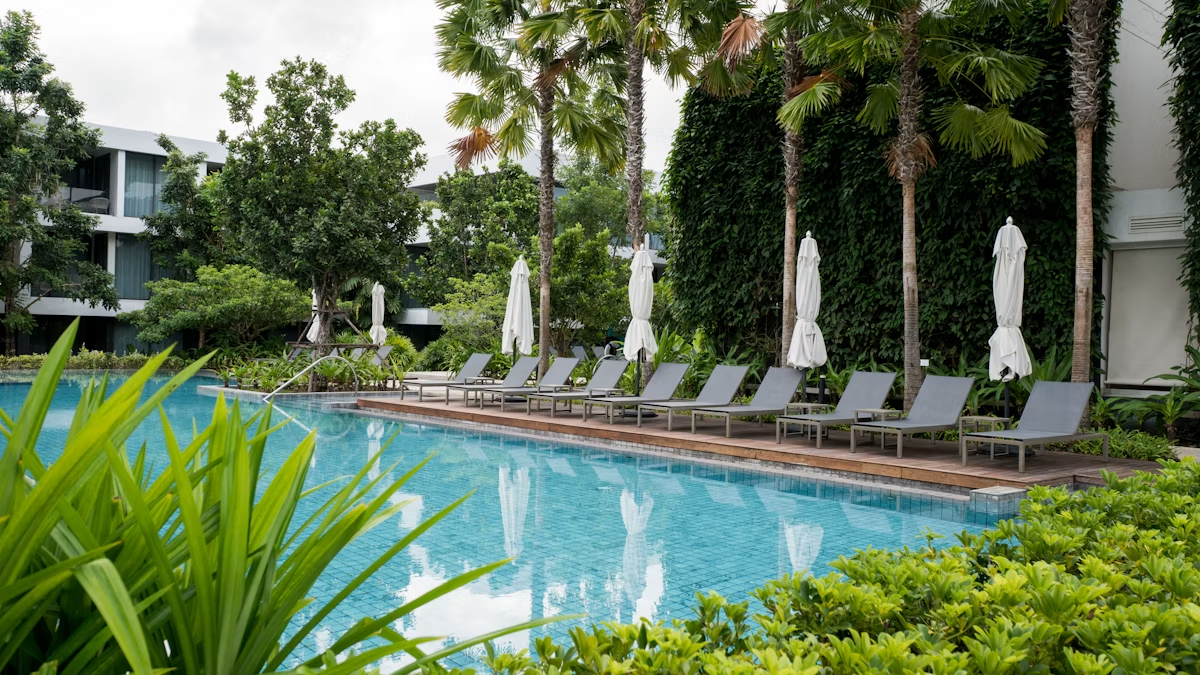
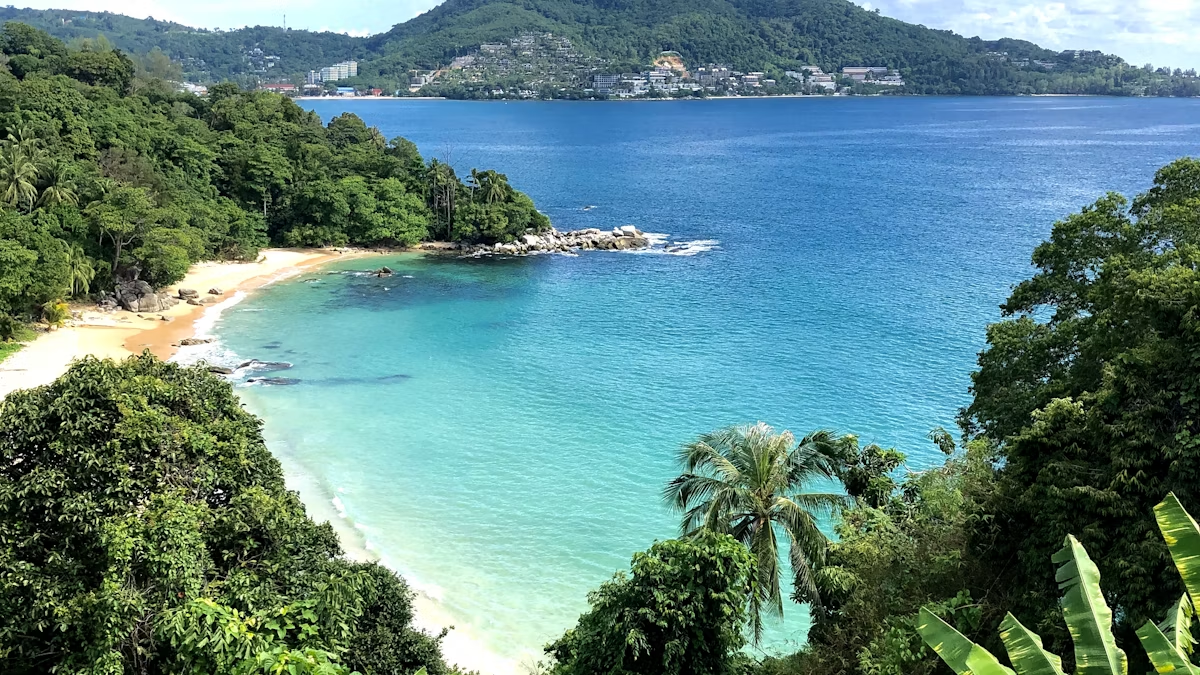
There is no single luxury property market in Phuket. A gated villa near Bang Tao, a hillside house above Kamala, a compact contemporary home near Surin and a pool villa around Nai Harn can all sit in the same glossy search results while offering completely different ownership experiences. The expensive mistake is not always paying too much. It is buying the wrong kind of expensive.
This is an editorial buyer guide, not a paid listing or developer profile. No property or broker is being recommended for sale. Use it to decide where to focus your viewings, then appoint an independent Thai property lawyer, surveyor and tax adviser for the transaction itself. For the wider legal framework, start with our guide to buying property in Phuket as a foreigner and keep the nominee-company warning close at hand.
The short answer
If you want the easiest life, start in Bang Tao. It has the strongest concentration of restaurants, beach clubs, gyms, international services, schools, healthcare and professional property managers. If the house is mainly a private retreat, look at Kamala, where the hillside setting can deliver more separation and drama. Surin is a more edited west-coast choice, with a smaller feel and very strong beach identity, but it demands closer attention to slope, access and seasonality. Nai Harn suits buyers who want a more settled southern routine with beaches, fitness, sailing and everyday life nearby, even if the airport and northern school run are less convenient.
First decide what the villa is for
A home for six weeks a year should not be underwritten like a family base, and neither should be judged like a managed holiday rental. Before comparing finishes, write down the real use case: private second home, family relocation, occasional entertaining, long-stay rental, short-stay rental where lawful, or a hybrid. That decision changes the right area, the sensible size, the management contract and the acceptable distance from services.
The Tourism Authority of Thailand's Phuket overview is useful for the broad geography: the island's beaches and activity map are not interchangeable, and TAT itself notes the contrast between busier southern beaches and quieter northern areas. Your viewing schedule should reflect that geography. Do not book four villas in four districts and assume a half-day will tell you how the island feels in January, August or school-run traffic.
Bang Tao: the service-led all-rounder
Bang Tao and the wider Cherngtalay belt are the obvious first stop for a buyer who wants a polished, low-friction life. The appeal is not just the beach. It is the accumulated ecosystem around it: restaurants, coffee, gyms, wellness, beach clubs, supermarkets, international schools, private healthcare and people who can manage a home when you are in London, Singapore or Sydney. That service density is a genuine luxury, especially for a house that will sit empty for parts of the year.
The trade-off is that Bang Tao can feel like a premium operating environment rather than a private island hideaway. New construction, traffic on the main routes, seasonal congestion and the growing distance between the beach and the newer inland stock all matter. A villa described as Bang Tao may be several kilometres from the sand. Measure the real drive to the beach, school, hospital and airport rather than relying on the area label.
Who should buy here?
Choose Bang Tao if the villa must work for family visits, visiting friends, a professional manager and your own ordinary week. It is also the easiest place to compare managed residences, standalone villas and newer gated developments. The downside is price pressure, more visible development and a risk that the house feels interchangeable if the architecture, plot and management are merely adequate.
Kamala: privacy, views and hill risk
Kamala is the classic choice for a more private west-coast retreat. The hills can create the thing buyers actually pay for: separation, sunset and a feeling of being above the resort strip. The best homes feel composed around the view, with indoor-outdoor living, shaded terraces and enough distance from the road to make the pool deck feel like your own.
The same topography creates the due-diligence list. Visit the access road in a normal car and after heavy rain. Ask who owns and maintains the road, inspect retaining walls and drainage, and confirm whether the spectacular view depends on undeveloped land that can change. Check power backup, water storage, internet resilience and the cost of maintaining a hillside property. A steep plot can turn a small repair into a specialist job, and salt, heat and humidity do not respect a luxury specification.
Who should buy here?
Kamala suits a second-home buyer who values privacy and entertaining more than a walkable daily routine. It can work for a managed rental villa, but only when the operator has a credible sales channel, maintenance team, guest transport plan and transparent reporting. Do not accept a projected nightly rate or occupancy number as evidence of performance. Ask for the actual net statement of comparable homes and the full list of deductions.
Surin: a smaller, sharper west-coast bet
Surin has a more contained feel than Bang Tao and a stronger sense of address than a generic inland development. Its appeal is the beach, the west-coast light and the ability to reach Kamala and Bang Tao without living inside their full service ecosystem. For a buyer who wants a discreet base rather than a family suburb, that can be the point.
It is also a market where the physical site deserves more attention than the styling. The Tourism Authority of Thailand describes Surin as a steep beach and warns that monsoon-season waves and storms make swimming unsuitable at times. That is a lifestyle fact with a property consequence: test the walk, road gradient, stormwater route and wet-season experience. A beach address is not the same as a beach you use every day.
Who should buy here?
Surin works for a design-conscious couple or second-home buyer who wants the west coast without the broadest possible resort machine. It is less obvious for families who need school logistics, bigger plots or a deep pool of maintenance vendors on the doorstep. Ask how the house is reached, parked, serviced and secured when the beach road is busy.
Nai Harn: the more lived-in south
Nai Harn and the Rawai side of the island appeal to buyers who want a southern rhythm: early swims, fitness, sailing, restaurants, long stays and a community that feels more lived in than a pure resort enclave. It can be the better choice for an owner who intends to use the house for months at a time rather than arrive for a short, managed escape.
The south is not automatically simpler. Airport trips take longer, school and hospital journeys can shape the week, and roads around popular beaches can become surprisingly awkward at peak times. Check the last kilometre to the villa, not just the map pin. Confirm drainage, water pressure, parking, rubbish collection and the practical route to groceries and healthcare. Ask whether the house is designed for year-round living or only photographed well in dry-season light.
Who should buy here?
Choose Nai Harn if the lifestyle is the asset and you want the house to support a real routine. It can suit couples, active retirees and families who prefer the south, but a northern school run or frequent airport travel can erase the emotional benefit. If the villa is mainly an investment, separate the area's appeal from the actual management plan and the legality of the intended rental use.
The ownership and title questions
A foreign buyer should treat the title structure as part of the asset, not as paperwork after the viewing. The Department of Lands publishes current material on land registration, foreign land and condominium procedures, and the Condominium Act is a separate legal framework from a villa on land. A villa may be marketed as freehold, leasehold, a unit in a development or a structure involving a Thai company. Those labels are not interchangeable, and this article does not tell you which one is lawful for your circumstances.
Before paying a reservation fee, have an independent lawyer verify the title deed, registered owner, encumbrances, access rights, building and pool approvals, utility arrangements, lease terms, renewal language, development rules and the exact entity selling the property. If a salesperson says a nominee company is routine, that is a reason to stop and take independent advice, not a reason to sign faster. Read the Department of Lands' foreign-land service materials and the current Condominium Act publication as starting points, not substitutes for advice.
The running cost is the real luxury test
Ask for a twelve-month operating budget before you fall in love with the pool. Include management, security, gardening, pool care, pest control, cleaning, insurance, internet, utilities, water storage, generator or battery maintenance, air-conditioning servicing, repainting, waterproofing, furniture replacement and the cost of opening and closing the house. If the villa is on a slope or near the sea, assume exterior finishes, pumps, drainage and metalwork need more attention than they would in a dry inland climate.
For a managed rental, insist on a sample owner statement showing gross revenue, platform fees, management deductions, maintenance, taxes, reserve funds and the owner's actual net result. Ask who approves repairs, who owns the guest relationship, whether the manager can change rates, and what happens if you want the home for Christmas or Chinese New Year. A headline return is not a business plan, and no property should be bought on a promised yield.
A viewing checklist for serious buyers
View each finalist twice, once in bright weather and once after rain if possible. Walk the final approach, open every external door, run the showers, inspect the plant room, check the pool edge and look behind wardrobes and kitchen plinths. Ask for the last two years of major repairs and service records. Stand in each bedroom with the doors open and closed. Listen for construction, road noise, pumps, bars and dogs.
Then ask the questions that make a broker uncomfortable: Who owns the access road? What is the emergency plan? What is the insurance exclusion for storm, flood or landslip? Where does rainwater go? Which approvals exist? Is the pool structure included in the registered or leased area? Who pays for common infrastructure? What is the exit route if the manager fails? If the answers arrive as a story rather than a document, the story is not due diligence.
Which Phuket coast fits you?
Choose Bang Tao for convenience, services and the easiest premium family life. Choose Kamala for privacy, views and a second-home feeling, with more hill and access risk. Choose Surin for a contained west-coast address and a more edited lifestyle. Choose Nai Harn for a lived-in southern routine where the owner uses the house rather than simply holds it.
The correct villa is the one whose ordinary Tuesday still works when the novelty has gone. If you want the wider area and cost context, read Where to Live in Phuket, then compare the people, schools and daily rhythms in our neighbourhood guide. The view should win the first viewing. The title, access, management and maintenance plan should win the purchase.
Get the next one first
One useful email a week on building a life abroad. No spam.