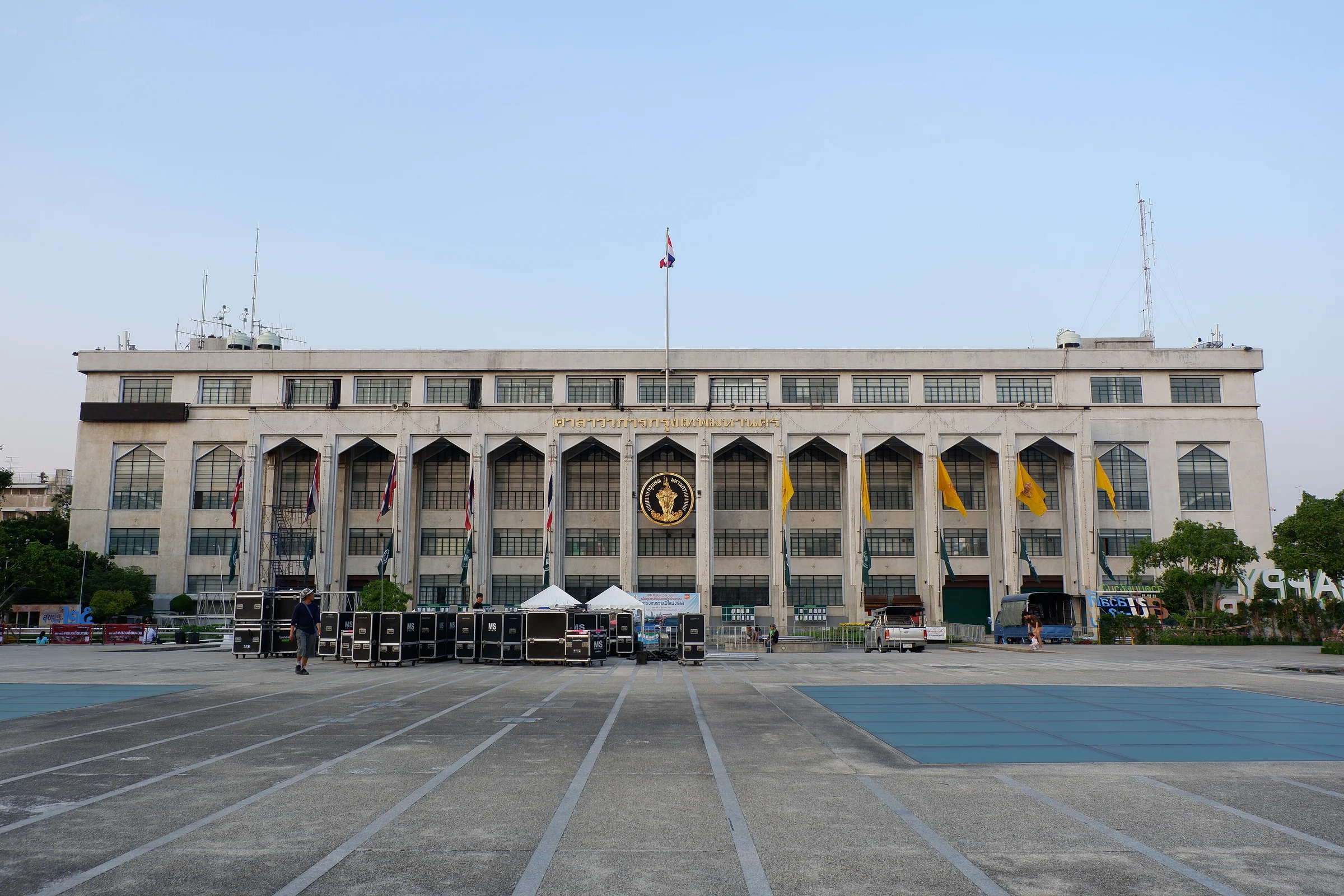
Bangkok City Hall is running low on emergency money. Governor Chadchart Sittipunt told a meeting at the Ministry of Interior on Monday 26 October that the Bangkok Metropolitan Administration (BMA), the city's local government, has just 28 million baht left in the 400 million baht central emergency budget it set aside for the whole year. Most of the rest has gone on this month's floods.
To keep paying for flood damage to people's homes, the BMA will ask the Bangkok Metropolitan Council, the city's elected legislature, on Wednesday 28 October to approve 1,139 million baht from its accumulated reserves. If you live in Bangkok and your home was flooded, this vote decides how quickly the repair payments you may be owed can be funded.
Where the emergency money went
According to the governor's remarks, as reported by Thai PBS, Bangkok Biz News and the InfoQuest news agency, the BMA has spent 372 million baht of its emergency budget. About 162 million baht went directly on relief such as survival kits and food. The other 210 million baht was paid in two instalments, 10 million and then 200 million, as the city's contribution to the central government scheme run with the Department of Disaster Prevention and Mitigation (DDPM), which pays affected households 5,000 or 9,000 baht.
The second pot is the BMA's accumulated reserve, money saved from past budget surpluses. Chadchart said much of it has already gone on repaying debts linked to the BTS Skytrain, which he put at more than 70 billion baht, leaving roughly 1,420 million baht. If the council approves the 1,139 million baht request, about 281 million baht would remain for any other emergency over the coming year. Added together, the 162 million, the 210 million and the 1,139 million make 1,511 million baht of flood relief paid from the city's own funds.
The governor called the city's finances fairly critical. He also said the BMA runs a balanced budget without borrowing and can collect only a narrow range of taxes, such as land and building tax, while carrying a very large population of flood victims. He denied any rift with the national government and said the government has enough money for its own payments. These budget figures come from the governor's spoken remarks; the BMA had not published a written breakdown that we could find at the time of writing.
Two separate payments, two separate applications
Many residents have been confused about which payment is which, so it helps to separate them. Official BMA guidance published on 3 October describes two sources of help, and you must apply for each one separately if you qualify for both.
The first is the government's basic living assistance, approved by the cabinet and paid per household at 5,000 or 9,000 baht. You register through the government's Tang Rat app or at your district office. Chadchart said more than one million Bangkok households have registered, about 200,000 cases were still being checked, and the Government Savings Bank was due to start transferring money on 26 October.
The second is the BMA's own damage and repair assistance, assessed on the actual damage and your documents. You apply online at claim.bangkok.go.th or in person at the district office for the address that was flooded, Monday to Friday during office hours. This is the payment the 1,139 million baht request is meant to fund.
What the BMA repair scheme can pay
The BMA lists maximum rates rather than flat payments, so many claimants will receive less than the ceiling. The main items are:
Home repairs: actual cost up to 88,600 baht per house, not available for rented homes. Temporary accommodation or rent: up to 3,000 baht a month for a maximum of two months. Tools and capital for your livelihood: up to 13,500 baht per family. Basic living support: 3,800 baht if the home is wholly damaged or 1,900 baht if partly damaged. Medical costs: up to 2,000 baht for outpatients and 4,000 baht for inpatients, plus 2,300 baht for anyone injured. Funeral costs: up to 35,700 baht, with up to a further 35,700 baht if the person who died supported the family.
The repair money covers the structure of the home, such as floors, doors and windows, wooden stairs, ceilings, walls and roof frames. Bangkok Biz News, summarising the BMA's published criteria, reports that electrical appliances, sanitary ware, paint, furniture and boundary fences or walls are not covered. Officials assess the claim against standard material prices and labour rates.
How to apply
The home must be your regular residence, water must have reached the living area, and it must lie in an area declared for emergency assistance. Applications must be made within 30 days of the disaster affecting you, so do not wait for Wednesday's vote before filing.
Have ready a copy of your ID card, a copy of your house registration, photographs of the damage taken both wide and close up, and any further documents for the type of help you are claiming. You do not need a police report. Tenants and people living in a home where they are not on the house registration can still apply for the items open to them, with evidence of their tenancy or residence. If you have no title deed, your name does not match the deed, or your home has no house number, the claim site advises applying at the district office instead.
Payment is made through PromptPay linked to your national ID number or to a bank account, and the BMA warns that the process takes at least 60 days. You can track an online claim through the status check on claim.bangkok.go.th.
What this means for foreign residents
The published process is built around Thai ID cards, house registration books and ID-linked PromptPay, and the BMA guidance we reviewed does not say whether foreign nationals can claim. If you are a foreign resident whose home was flooded, ask your district office directly, or call the BMA hotline on 1555, and bring your passport, lease or title documents and photographs of the damage. If you rent, your landlord is the person who would claim for structural repairs.
What happens on 28 October
The council is due to consider the 1,139 million baht request on Wednesday. Thai PBS reported that if the money cannot be released from the reserve, the BMA may have to move funds from other budgets, such as an urban development allocation of more than 800 million baht, which could delay city projects, infrastructure repairs and preparations for next year's rainy season. We will update this story once the council has voted.