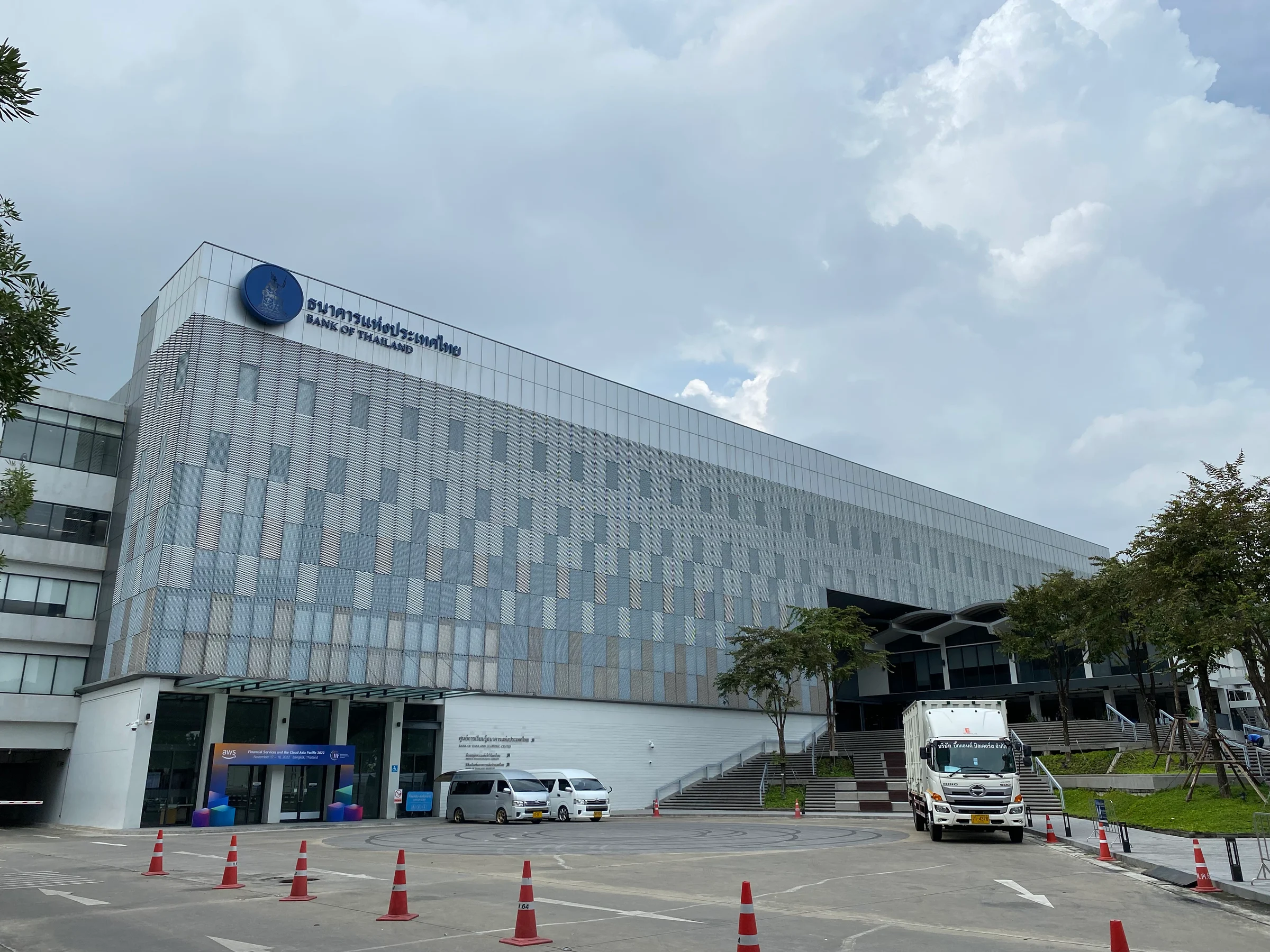
Thailand's central bank has left borrowing costs where they are, but it is telling households to expect prices to climb for the next few months. On Wednesday 28 October 2026 the Monetary Policy Committee (MPC) of the Bank of Thailand voted unanimously to keep the policy rate at 1.00 percent a year. The policy rate is the one-day repurchase rate the bank uses to steer what commercial banks charge for loans and pay on deposits.
It was the fourth meeting in a row without a change, according to Reuters reporting carried by the Bangkok Post. The bank cut the rate six times, by a total of 1.5 percentage points, between October 2024 and February 2026.
What the bank said
In its press release, the committee said the economy is gaining momentum from exports and investment linked to technology and artificial intelligence, but that growth is still below potential and the benefits are concentrated in a few industries. It now forecasts growth of 2.4 percent in 2026 and 2.1 percent in 2027.
The more practical line for residents is on prices. The bank expects headline inflation to average 2.1 percent in 2026 and 1.3 percent in 2027, and says inflation should rise through the rest of this year and into early next year because of energy prices and the effects of El Niño, the weather pattern that tends to bring hotter, drier conditions and push up food costs. It expects inflation to ease again later as those effects fade.
Why it matters if you live in Thailand
Everyday costs: the bank's own forecast points to higher prices for fuel, power and some food over the coming months. It also said it is watching how far businesses pass rising costs on to customers. If you budget in baht, it is a sensible time to check fixed costs such as rent renewals, school fees and utility bills.
Loans: the committee said borrowing costs on private sector loans have stayed broadly stable and in line with the policy rate. With no change on Wednesday, there is no new reason for Thai banks to reprice existing baht loans. Anyone with a Thai mortgage or car loan should still read their own bank's notices, because each bank sets its own lending rates.
The baht: the bank noted that the baht has weakened against the US dollar, which it linked to expectations of tighter US monetary policy and to higher oil prices amid tension in the Middle East. For people whose income or savings are in dollars or other foreign currencies, a weaker baht means each transfer buys a little more in Thailand, while imported goods can cost more. MEM does not forecast exchange rates; check your bank or transfer provider's live rate before sending money.
Tourism: the bank expects the number of foreign tourist arrivals to decline amid higher oil prices. That matters most in Phuket, Pattaya, Samui and other places where many expats work in, or depend on, the tourism economy.
What comes next
The committee said it will keep watching the risk that inflation rises further, including from the conflict in the Middle East and the limited room for energy subsidies. Reuters reported that most economists it surveyed expect the rate to stay at 1.00 percent through the end of 2027, although the bank itself gave no guidance on future moves. The full statement is published in English and Thai on the Bank of Thailand website.