Thailand's Destination Thailand Visa (DTV) is sold as a five-year visa, but that does not mean five years of unbroken stay. Each time you enter you get up to 180 days, and you can extend that stay once, inside Thailand, by up to another 180 days. After that you have to leave. The extension is where many remote workers get caught out, because the money test at Immigration is not quite the same as the one the embassy used, and the clock on it starts a month before you apply.
How the DTV stay actually works
Thai embassies describe the DTV as a multiple-entry visa valid for five years, with a stay of 180 days per entry. The Royal Thai Embassy in Helsinki, for example, says an extension of another 180 days is possible at the Thai Immigration Bureau, and that after the maximum of 180 plus 180 days the holder must depart and re-enter while the visa is still valid. The same page tells DTV holders to contact the Immigration Bureau directly about extensions once they are in Thailand.
| Stage | What happens | Where |
|---|---|---|
| Entry | Up to 180 days' stay | Any international checkpoint |
| Extension | One extension of up to 180 days for that entry | Immigration office for the area you live in |
| After 360 days in total | You must leave Thailand | Then re-enter on the same DTV if it is still valid |
What Immigration asks remote workers for
Immigration Division 1, which handles foreigners living in Bangkok, publishes a DTV-specific extension list. For the telework group, which covers digital nomads, freelancers, remote employees of foreign companies and foreign talent, it asks for the following.
- Form TM.7, the standard application to extend a temporary stay.
- A copy of your passport data page, visa and arrival stamp, plus one 4 x 6 cm or 2-inch photo.
- Proof of at least 500,000 baht. This can be money in a Thai bank account, a foreign account that can be verified, or both combined, held for not less than 30 days before the application date. Alternatively, a certificate from your company or employer, or a guarantee letter, showing at least 500,000 baht in support on the application date, with documents proving your relationship to the guarantor.
- Proof of work, such as an overseas work contract still in force on the application date, or your employment history or previous work.
- Proof of where you live in Thailand, such as rental and payment evidence for a hotel, condominium or house, or a certified copy of the owner's title deed.
- Copies of your previous 90-day report (TM.47) and your notification of residence (TM.30).
How much it costs
Immigration Division 1's fee page lists 1,900 baht for an extension of stay and says fees are not refunded under any circumstances. The page does not list a separate DTV rate, so budget for 1,900 baht and bring the exact documents on the list rather than hoping to fix gaps on the day.
Can you do it online?
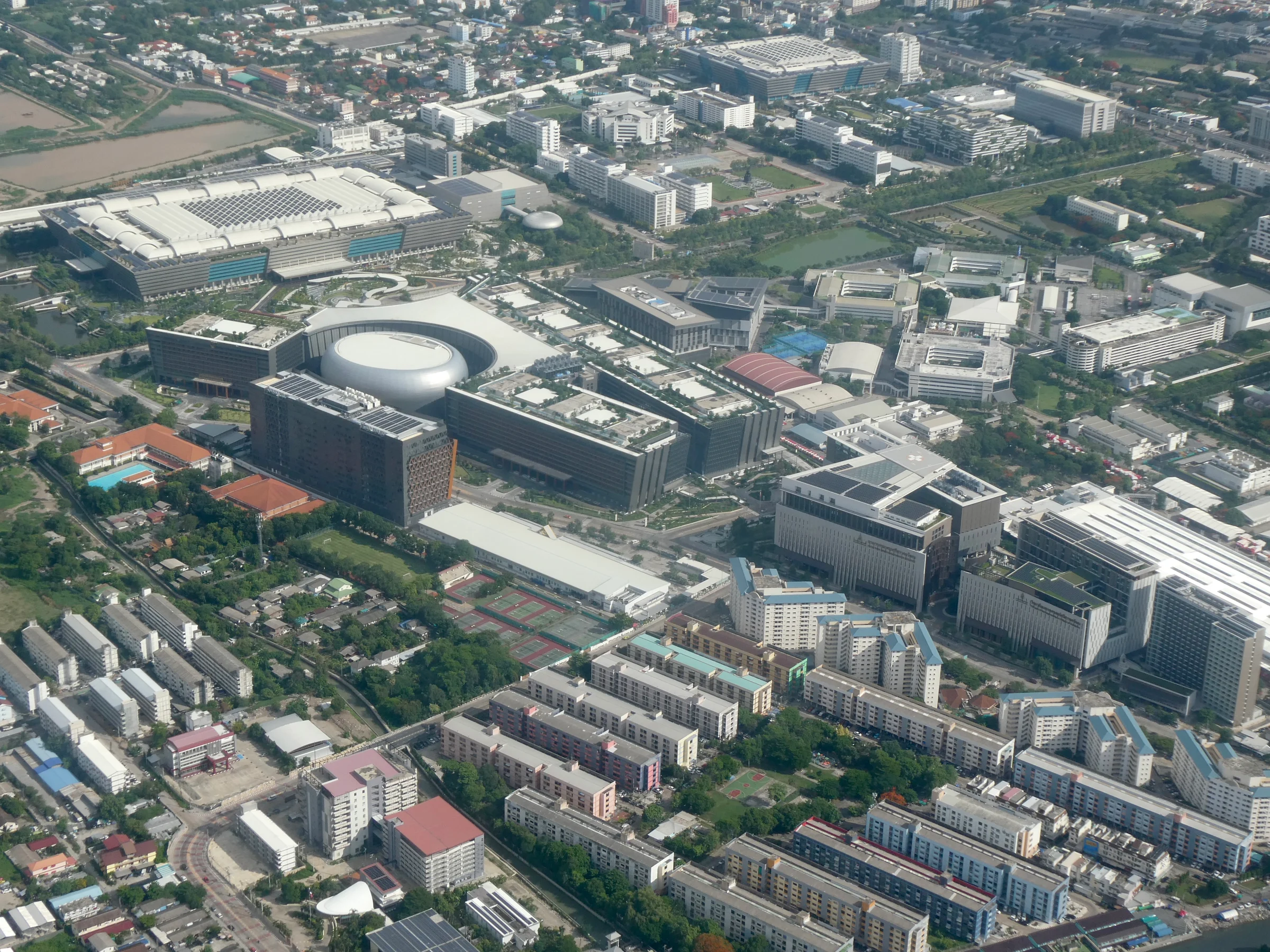
Probably not. Immigration Division 1 says its e-Extension service covers twelve listed reasons for extending a stay, including tourism, public school teachers and the press. The DTV is not on that list, so plan for an in-person visit. In Bangkok that means the Government Complex on Chaeng Watthana Road; outside Bangkok, use the immigration office for your province and check whether it asks for anything extra.
Not a telework DTV holder?
The same Bangkok list has a second group for people on the DTV for activities such as Muay Thai and martial arts, cooking, sport and training, medical care, seminars, and art and music performance. The money test is the same 500,000 baht, but proof of work is replaced by proof of the activity, for example a hospital certificate for medical care, a certificate from the relevant government body for soft power courses, and photographs of you taking part.
Before you book a border run to reset the clock
Leaving and coming back on the same DTV gives you a new entry, but it is not a new visa. If your DTV is close to expiry and you want a fresh one, the rules have tightened. The Helsinki embassy, for example, now asks applicants for a criminal record certificate and, for anyone who is not a Finnish or Estonian citizen, a valid Finnish or Estonian permanent residence permit card. Check the page of the embassy you plan to use before you travel to it.
FAQ
How many times can I extend a DTV?
Once per entry, by up to 180 days, according to Thai embassy guidance. After 180 plus 180 days you must leave Thailand and can re-enter on the same DTV while it is valid.
How long does the 500,000 baht need to be in my account?
Immigration Division 1's list says the account balance must be held for not less than 30 days before the application date. A guarantee letter or employer certificate is judged on the application date instead.
What does a DTV extension cost?
Immigration Division 1 lists 1,900 baht for an extension of stay. Fees are not refunded.
Can I use a foreign bank account?
Yes, the Bangkok list accepts a foreign account that can be verified, or a Thai and foreign account combined.
Do I need my TM.30 and 90-day report?
Yes. The list asks for copies of your previous TM.47 90-day report and your TM.30 notification of residence.
Is this legal advice?
No. Requirements can differ between immigration offices and change without much notice. Check with your local office before you apply.
Sources and verification
Factual claims and service details were checked against the sources below on . Prices, rules and availability can change; confirm consequential decisions with the relevant authority or provider.
- Visa Extension (item 39: Destination Thailand Visa)Immigration Division 1, Royal Thai Police
- FeeImmigration Division 1, Royal Thai Police
- Destination Thailand Visa (DTV)Royal Thai Embassy, Helsinki
- Visa ExtensionImmigration Bureau, Royal Thai Police